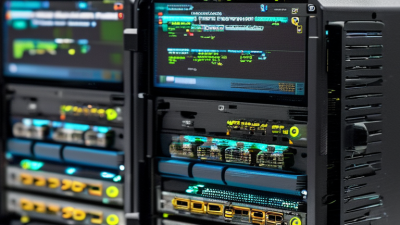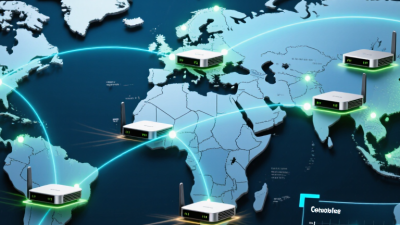
A Juniper Router is a specialized network device that directs data between computers, servers, offices, and internet providers. It examines packet destinations, selects efficient paths, and forwards traffic through suitable interfaces. In a busy data center, this process happens continuously, often within milliseconds. The result is not simply faster communication. It is controlled, measurable connectivity.
Juniper routers commonly use routing protocols such as BGP, OSPF, and IS-IS to learn network paths. Their control plane makes routing decisions, while the forwarding plane moves packets through the hardware. This separation helps networks handle heavy traffic, failures, and changing links. Different product families serve different environments. MX routers often support service-provider networks, while PTX platforms target high-capacity core infrastructure. Some Juniper platforms also support automation and detailed operational monitoring.
The details matter.
A technician checking interface counters may discover packet loss before users report an outage. A routing table can reveal an unexpected path, an overloaded link, or a misconfigured neighbor. However, this explanation is not complete. Router behavior depends on the model, Junos OS version, configuration, licenses, and surrounding equipment. Marketing descriptions can also make complex features sound effortless. Real deployment requires careful design, testing, security controls, and documented change procedures. This guide explains how a Juniper Router works in practical terms, while recognizing that reliable networking involves more than choosing hardware. It also considers packet forwarding, routing decisions, management tools, and common operational challenges.
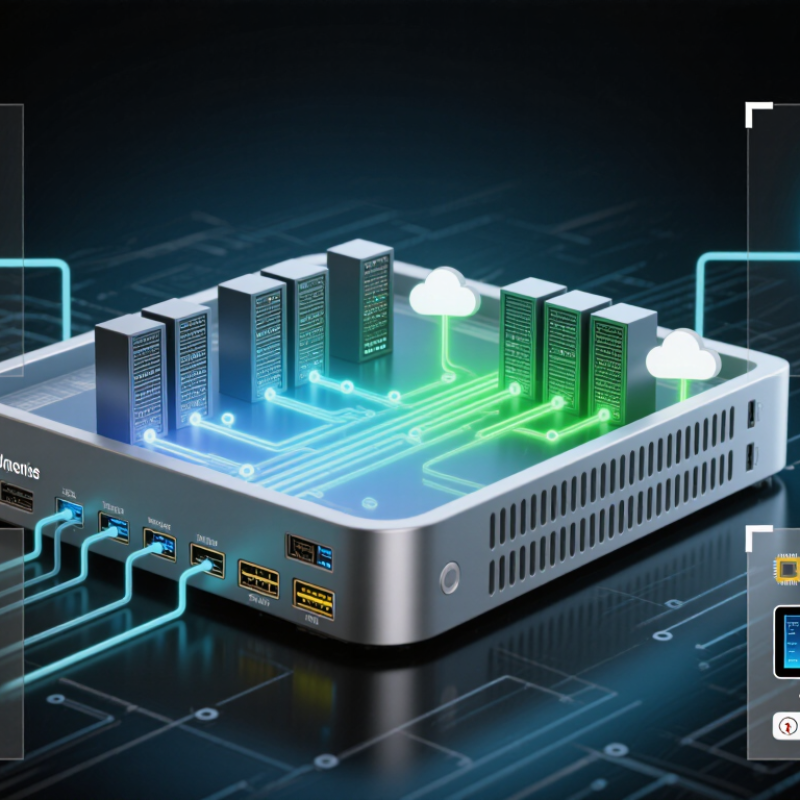
A Juniper router is a network device that directs data between different networks. It examines each packet’s destination address and selects an efficient path. In a server room, the router may connect offices, data centers, cloud services, and internet links. Its purpose is practical: keep traffic moving, separate network segments, and maintain reliable communication.
Core functions include routing, packet forwarding, traffic filtering, and link management. The routing engine builds a routing table from configured routes and routing protocols. The forwarding system then sends packets through the correct interface, often within microseconds. Administrators can apply access rules, quality-of-service policies, and virtual routing instances. These features help prioritize voice calls, protect sensitive systems, and support many customers on shared infrastructure.
In real deployments, performance depends on more than hardware speed. A small addressing mistake can send traffic toward the wrong gateway. It happens. Engineers usually verify interface status, routing tables, logs, and packet statistics before changing production settings. Redundant power supplies and backup links can reduce downtime, although they do not remove every risk. Regular software updates, documented configurations, and controlled testing improve reliability. A router is powerful, but careless planning can still create congestion or an unexpected outage.
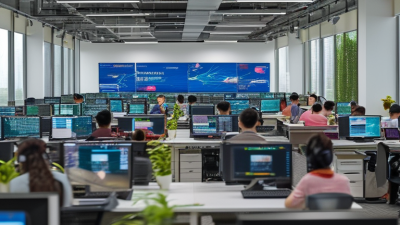
A carrier-grade router is a compact traffic-control system. Its chassis contains line cards, network ports, memory, cooling, and redundant power supplies. The forwarding plane uses specialized silicon to inspect packet headers and select the next hop quickly. The control plane runs routing protocols, maintains neighbor relationships, and builds the forwarding table.
The operating system connects these layers. It manages interfaces, access rules, routing policies, telemetry, and software updates. Protocols such as BGP and OSPF exchange reachability information, while high-speed interfaces move traffic between data centers, branches, and cloud environments. The International Telecommunication Union reported 5.4 billion internet users in 2023. That scale increases pressure on reliable routing hardware. Small delays can become visible service problems.
A practical lab check should include link failure, route withdrawal, and power redundancy. Watch the logs. A backup control module may reduce disruption, but it cannot correct poor configuration. Uptime Institute’s 2024 Global Data Center Survey reported that more than half of respondents had experienced a significant outage within three years. This suggests hardware resilience alone is not enough. I would also question automatic failover tests, because an untested safeguard is only an assumption. Telemetry, event timestamps, and clear rollback procedures make the router easier to operate under pressure.
A router combines hardware interfaces, packet-forwarding logic, memory, and routing software to move packets between networks. The chart shows standardized packet-size limits that influence interface hardware and forwarding decisions.
Values are measured in bytes. Ethernet frames have a 64-byte minimum and a 1,518-byte standard maximum, while IP technologies define minimum packet or link-size requirements. These limits help router hardware determine whether packets can be forwarded directly or require fragmentation, segmentation, or an MTU-related error.
References: RFC 791, RFC 8200, and IEEE 802.3 Ethernet frame specifications.
A high-performance enterprise router receives packets through physical or virtual interfaces. It checks frame headers, validates the packet, and identifies its destination address. The control plane learns routes through configured policies and routing protocols. It then installs the best paths into a forwarding information base. The data plane uses that table for rapid lookups. Longest-prefix matching selects the most specific route. Dedicated forwarding hardware can complete this decision in microseconds. That speed matters when traffic arrives continuously.
The router also applies access rules, quality-of-service policies, and network address translation when required. It places packets into queues before sending them through the selected outbound interface. Congestion changes this process. Buffers may fill, causing delay or packet loss.
The 2024 Global Internet Phenomena Report attributed roughly 56% of downstream internet traffic to video, showing why queue management remains important.
IPv6 adds another practical consideration. Recent APNIC Labs measurements place global IPv6 capability near 40%, so dual-stack forwarding is still necessary. Small details matter.
In production, engineers monitor interface errors, queue depth, route changes, and latency. Telemetry can reveal a failing link before users report slow applications. However, routing tables do not explain every problem. A correct path may still perform poorly because of congestion, asymmetric routing, or an overloaded firewall.
I have found that packet captures often challenge the first diagnosis. Good troubleshooting therefore compares forwarding decisions with real packet behavior, not assumptions alone.
A modern router is more than a box forwarding packets. Its operating system controls routing, security policies, interfaces, and device health. It supports protocols such as BGP and OSPF, while automation tools apply consistent settings across many sites. Telemetry streams show traffic levels, packet loss, memory use, and interface errors. In a busy operations room, these details appear as dashboards, alerts, and change histories.
Network management becomes stronger when the system supports role-based access, encrypted APIs, configuration rollback, and software images with checksums. The 2024 Global Data Center Survey reported that power problems caused 54% of serious outages. That finding makes proactive monitoring practical, not decorative. The 2024 Cost of a Data Breach Report placed the global average breach cost at 4.88 million dollars. Segmentation, audit logs, and rapid policy changes therefore deserve daily attention. Still, automation is not magic. A wrong template can spread mistakes quickly.
Tips: Start with read-only monitoring. Define alert thresholds for latency, loss, and CPU use. Test rollback before production changes. Keep two administrators reviewing sensitive policies. In lab testing, simulated failures often reveal unclear ownership faster than dashboards do. I would also question noisy alerts. More warnings do not always create better decisions. An overlooked manual step can remain the weakest control.
| Network Dimension | How It Works | Common Technologies or Methods | Operational Benefit | Typical Measurement |
|---|---|---|---|---|
| Routing Decision | The router examines the destination address and selects a path using its routing table. | Longest-prefix matching, administrative distance, route metrics | Directs packets toward the most appropriate reachable network. | Route count, lookup time, path availability |
| Packet Forwarding | The forwarding plane moves packets from an incoming interface to an outgoing interface after a route is selected. | Forwarding information base, hardware acceleration, packet queues | Enables fast and consistent packet delivery. | Packets per second, forwarding rate, packet loss |
| Control Plane | The control plane learns network information, builds routing tables, and communicates with neighboring devices. | Routing protocols, neighbor discovery, route calculation | Maintains network reachability and adapts to topology changes. | Convergence time, neighbor status, route changes |
| Static Routing | An administrator manually defines a fixed path to a destination network. | Default routes, static next hops, backup routes | Provides predictable forwarding for small or stable network segments. | Configured routes, next-hop reachability |
| Dynamic Routing | Routers exchange reachability information and automatically recalculate paths when conditions change. | Link-state, distance-vector, and path-vector algorithms | Improves scalability and reduces manual route maintenance. | Convergence interval, protocol sessions, route stability |
| IPv4 and IPv6 Support | The router processes packets using either 32-bit IPv4 addresses or 128-bit IPv6 addresses. | Dual stack, prefix length, neighbor discovery | Supports current networks while enabling gradual IPv6 adoption. | Address utilization, prefix count, protocol traffic |
| Interface Connectivity | Physical or virtual interfaces connect the router to local networks, wide-area links, or other routing domains. | Ethernet, fiber links, VLAN interfaces, tunnels | Provides flexible connectivity across different network environments. | Interface speed, utilization, errors, link state |
| VLAN and Segmentation | The router separates traffic between logical networks and controls communication between segments. | VLAN tagging, subinterfaces, virtual routing instances | Improves isolation, organization, and security policy control. | Segment count, inter-segment flows, blocked connections |
| Quality of Service | Traffic is classified and placed into queues according to application needs or service policies. | Classification, marking, scheduling, rate limiting | Protects latency-sensitive traffic during congestion. | Latency, jitter, queue drops, bandwidth allocation |
| Access Control | Rules inspect packet attributes and permit, reject, or log traffic according to defined policies. | Address filters, service filters, zone policies | Restricts unauthorized communication and supports network governance. | Allowed flows, denied flows, policy matches |
| Network Address Translation | Private addresses can be translated to shared or public addresses as traffic crosses network boundaries. | Source translation, destination translation, port translation | Conserves public address space and supports controlled connectivity. | Translation sessions, port usage, failed mappings |
| High Availability | Redundant components or devices maintain service when a link, interface, or processing element fails. | State synchronization, gateway redundancy, graceful restart | Reduces downtime and limits the impact of hardware or software failures. | Failover time, redundancy state, service interruptions |
| Configuration Management | Administrators define interfaces, routing behavior, policies, and services through a controlled configuration system. | Command-line access, structured configuration, automation interfaces | Improves consistency, auditability, and repeatable deployment. | Configuration revisions, change success rate, rollback count |
| Monitoring and Telemetry | The router collects operational data about traffic, interfaces, routes, resources, and system events. | Event logs, flow records, polling, streaming telemetry | Helps detect faults, analyze performance, and support capacity planning. | CPU usage, memory usage, traffic volume, alert count |
| Software Maintenance | The operating system provides software releases, security updates, feature improvements, and recovery options. | Version control, image validation, scheduled upgrades | Maintains security, reliability, and compatibility over the device lifecycle. | Software version, patch status, upgrade duration |
A modern enterprise router moves packets between offices, data centers, cloud platforms, and internet exchanges. It selects paths using routing protocols such as BGP and OSPF. It can also enforce access rules, prioritize voice traffic, and report link performance. This matters. The International Telecommunication Union’s Facts and Figures 2023 estimated that 5.4 billion people used the internet, creating constant pressure on network capacity and reliability.
In branch networks, routers connect small offices to central systems through fiber, broadband, or cellular links. Secure tunnels can join remote employees with internal applications. Quality-of-service policies may protect video meetings when bandwidth becomes crowded. A practical deployment should include dual links and automatic failover. One overlooked issue is configuration drift. A policy that worked last year may now create slow routes or unexpected access gaps.
Large enterprises use routers at campus edges, data centers, and cloud gateways. Service providers also use them to separate customers, manage traffic, and support IPv6 growth. GSMA’s Mobile Economy 2024 reported 4.6 billion mobile internet users in 2023, increasing demand for dependable backhaul and transport networks. Telemetry helps engineers spot packet loss before users complain. Still, dashboards can mislead. Clean graphs do not always prove healthy applications, especially during brief congestion or asymmetric routing.