Leave Your Message
-
Phone
-
E-mail
-
Whatsapp

Choosing among China’s top Portable Router suppliers requires more than comparing prices or copying technical specifications. A dependable supplier should understand real travel conditions, unstable hotel networks, crowded exhibition halls, and outdoor work sites. Product experience matters because a router that performs well in a laboratory may struggle inside a metal vehicle or concrete building.
John Gage, a respected networking technology leader, famously said, “The network is the computer.” His words remain relevant when evaluating a Portable Router. Connectivity depends on the entire system, including modem compatibility, antenna design, firmware stability, battery capacity, and customer support. A supplier should explain these details clearly, not hide behind impressive download numbers.
Look for verified factory capability, consistent quality control, and transparent testing records. Ask whether each model supports the required 4G or 5G bands in target markets. Check heat management, roaming performance, SIM compatibility, encryption, and firmware update policies. Small details matter.
So does after-sales service.
A strong supplier can provide samples, certification documents, test reports, and realistic delivery timelines. It should also discuss warranty handling without vague promises. However, supplier websites can present an incomplete picture. Even a polished factory may have uneven batch quality, and even a cheaper model may deliver excellent value. This is where careful sampling, field testing, and direct communication become essential. The best choice is not always the most powerful Portable Router. It is the one that remains stable, secure, and practical after daily use exposes its weaknesses.
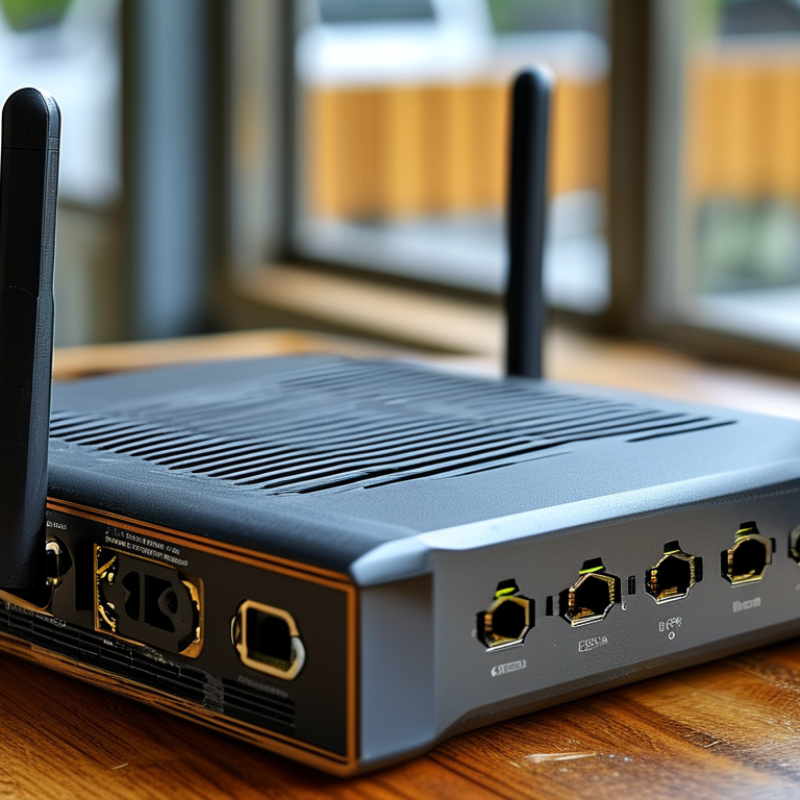
A portable router is a small networking device that uses a SIM or eSIM to receive cellular data. It then creates a private Wi-Fi network for phones, laptops, tablets, and smart equipment. Unlike public Wi-Fi, it can travel with you. Battery power, antenna quality, and supported network bands affect real-world performance.
The GSMA Mobile Economy 2024 report estimated 4.7 billion mobile internet users worldwide in 2023. ITU Facts and Figures 2023 also reported that about 2.6 billion people remained offline. These figures show why flexible connectivity still matters. Remote workers may need stable access between home and office. Field technicians can connect laptops at temporary sites. Travelers may avoid unreliable hotel networks. Families may share one connection during road trips. A portable router is also useful as a backup when fixed broadband fails. However, coverage maps can look better than actual service. Buildings, weather, congestion, and local frequency bands still matter.
Tips: Check supported cellular bands before comparing suppliers. Test battery life with several connected devices, not one phone. Choose WPA3 security when available. Ask about firmware updates and warranty support. A lower price may hide weak antennas or expensive data plans. I would also test the device near a window and inside a vehicle; performance can change sharply. That small test is often overlooked.
| Portable Router Type | How It Connects to the Internet | Typical Wi-Fi Standard | Typical Connected Devices | Battery or Power Requirement | Typical Weight Range | Best For | Key Selection Considerations |
|---|---|---|---|---|---|---|---|
| 4G LTE Mobile Hotspot | Uses a compatible cellular SIM card and a mobile network. | Wi-Fi 4 or Wi-Fi 5 | Approximately 10–32 devices, depending on the model and network conditions. | Rechargeable battery, commonly providing about 6–12 hours of use. | Approximately 70–150 g | Travelers, remote workers, temporary offices and backup connectivity. | Check supported LTE bands, SIM format, carrier compatibility, battery capacity and charging interface. |
| 5G Mobile Hotspot | Uses a compatible 5G or 4G SIM card and a cellular network. | Wi-Fi 5 or Wi-Fi 6 | Approximately 15–32 devices, depending on the product design and network environment. | Rechargeable battery, commonly providing about 4–12 hours of use because 5G can consume more power. | Approximately 150–300 g | Users who need higher mobile speeds, lower latency and flexible connectivity. | Verify 5G frequency bands, 4G fallback support, thermal management, battery life and local network certification. |
| Travel VPN Router | Connects to hotel, public or existing Wi-Fi; some models also support Ethernet or USB tethering. | Wi-Fi 5 or Wi-Fi 6 | Usually 10–30 devices, depending on hardware and software limitations. | Usually powered by USB; some models include an internal battery. | Approximately 100–250 g | Business travelers, hotel guests and users who want to share one connection securely. | Review VPN protocol support, repeater mode, captive-portal handling, Ethernet speed and firmware update policy. |
| USB-Powered Travel Router | Connects through Wi-Fi, Ethernet, USB tethering or another available uplink. | Wi-Fi 4, Wi-Fi 5 or Wi-Fi 6 | Typically 5–30 devices. | Powered by a USB adapter, laptop, power bank or vehicle USB port. | Approximately 60–180 g | Light travelers, digital nomads and users who already carry a power bank. | Check power input, operating modes, Ethernet port speed, compactness and compatibility with tethered devices. |
| Battery-Powered Wi-Fi Repeater | Receives an existing Wi-Fi signal and rebroadcasts it. | Wi-Fi 4 or Wi-Fi 5 | Usually 5–20 devices. | Rechargeable battery, commonly providing about 4–10 hours of use. | Approximately 100–250 g | Improving coverage in temporary accommodation, outdoor areas or small workspaces. | Consider repeater throughput, signal stability, placement flexibility, security modes and battery capacity. |
| Portable Dual-WAN Router | Combines two uplinks such as Ethernet, Wi-Fi, USB tethering or cellular connectivity. | Wi-Fi 5 or Wi-Fi 6 | Approximately 15–50 devices, depending on the processor and firmware. | Usually USB or mains powered; battery support varies. | Approximately 180–500 g | Mobile teams, field operations and users requiring connection failover. | Evaluate failover behavior, load balancing, WAN port speed, management functions and long-term software support. |
| Industrial or Field Portable Router | May support cellular, Ethernet, Wi-Fi and specialized industrial interfaces. | Wi-Fi 4, Wi-Fi 5 or Wi-Fi 6 | Varies widely; commonly 10–50 or more devices. | External power, vehicle power or industrial power input; battery operation may require an additional system. | Approximately 300 g–1.5 kg | Construction sites, transport, public safety, temporary networks and remote monitoring. | Check operating temperature, ingress protection, mounting options, surge protection, certifications and remote management. |
Typical values are general market ranges rather than guaranteed specifications. Actual performance depends on network coverage, supported frequency bands, Wi-Fi interference, firmware, connected devices and local regulatory requirements.